Where Do I Start With Baby Weaning? - The Question I Get Asked A LOT as a Child Nutritional Advisor.
Post Date :
If starting solids feels confusing, you are definitely not alone. A UK government survey found that 64% of parents had received conflicting advice about weaning, while almost half felt confused about how much food to give their baby (UK government survey)
And quite honestly, that does makes sense to me.
One person tells you to start with purées. Another says baby-led weaning is the only “right” way. Social media tells you your baby should be eating 100 foods before one, while another post warns you not to introduce allergens too early. Then there are the worries about choking, iron, textures, portion sizes and whether your baby is “behind.”
It is a huge amount of information at a time when most parents are already exhausted.
But the good news is starting solids does not need to be perfect to go well.
So, what actually is 'weaning'?
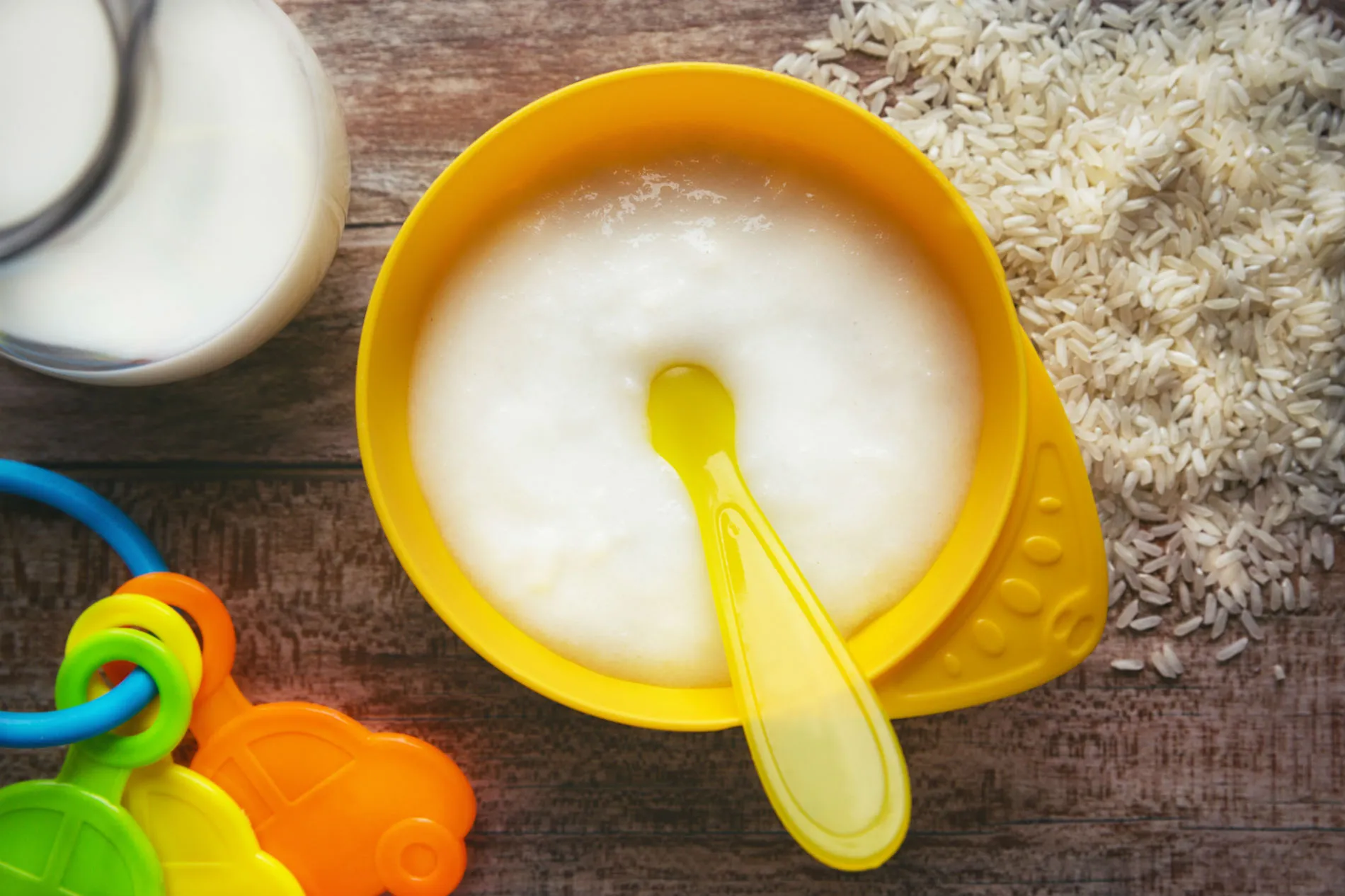
Weaning (also called complementary feeding) is the process of introducing food alongside breast milk or formula, usually at around 6 months of age (I will go into more detail about this later).
At this stage, babies begin needing more nutrients than milk alone can provide, particularly iron and zinc. But weaning is not just about nutrition. It is also about learning how to chew and swallow, experiencing textures, developing oral motor skills and gradually becoming familiar and confident around food.
Although social media often focuses on how much babies are eating, early weaning is actually much more about learning than consuming large amounts of food.
When can baby weaning start?
One of the most common questions parents ask is: “when can baby led weaning start?”
Most babies are developmentally ready to begin baby weaning at around 6 months old. This is because babies need certain physical skills in place before they can safely manage finger foods.
Signs of readiness include being able to sit upright with minimal support, having good head and neck control, bringing objects to their mouth independently and showing a clear interest in food.
The evidence consistently suggests that developmental readiness matters far more than trying to follow one “perfect” method. A review published in the Italian Journal of Pediatrics highlighted that responsive feeding approaches (where parents respond to their baby’s cues, appetite and development) are more important than rigidly sticking to one specific weaning style. Italian Journal of Pediatrics review on complementary feeding
And importantly, starting baby weaning does not mean your baby instantly eats full meals independently from day one.
What is best to start with - baby led or traditional weaning?
In reality, most families naturally combine approaches. You might spoon feed yoghurt or porridge sometimes while also offering soft finger foods alongside it. That is completely normal.
A more recent review published in Nutrients in 2024 found that baby-led approaches may support autonomy, texture acceptance and family meal participation, but researchers also stressed that there is no one-size-fits-all method. Parents still need guidance around safety, iron intake and responsive feeding. Nutrients review on complementary feeding approaches
The internet tends to make weaning feel very black and white. In reality, most healthy weaning journeys sit somewhere in the middle.
Start simple
You do not need complicated recipes, themed plates or Pinterest-perfect meals.
Simple foods are more than enough when starting solids.
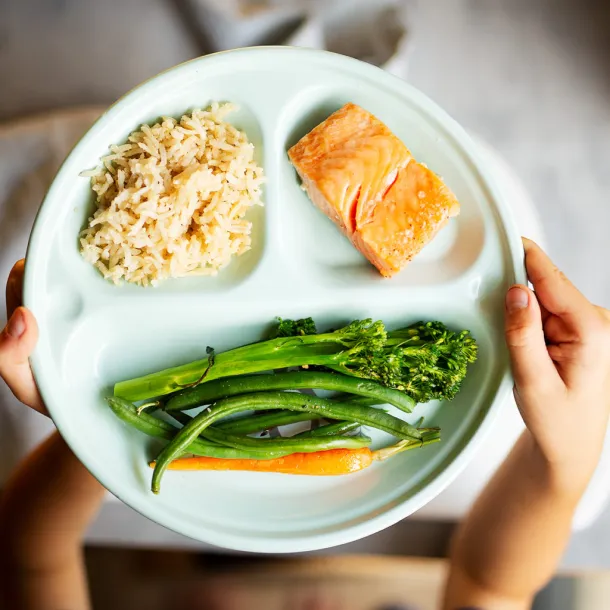
Soft vegetables, avocado, banana, oats, yoghurt, eggs and shredded meats can all work really well in the early stages. One thing worth prioritising early on is iron-rich foods, because babies’ natural iron stores begin to reduce from around 6 months onwards.
It is also important to remember that babies often eat very small amounts at first. That is normal. In the beginning, they are learning skills, not sitting down to full meals.
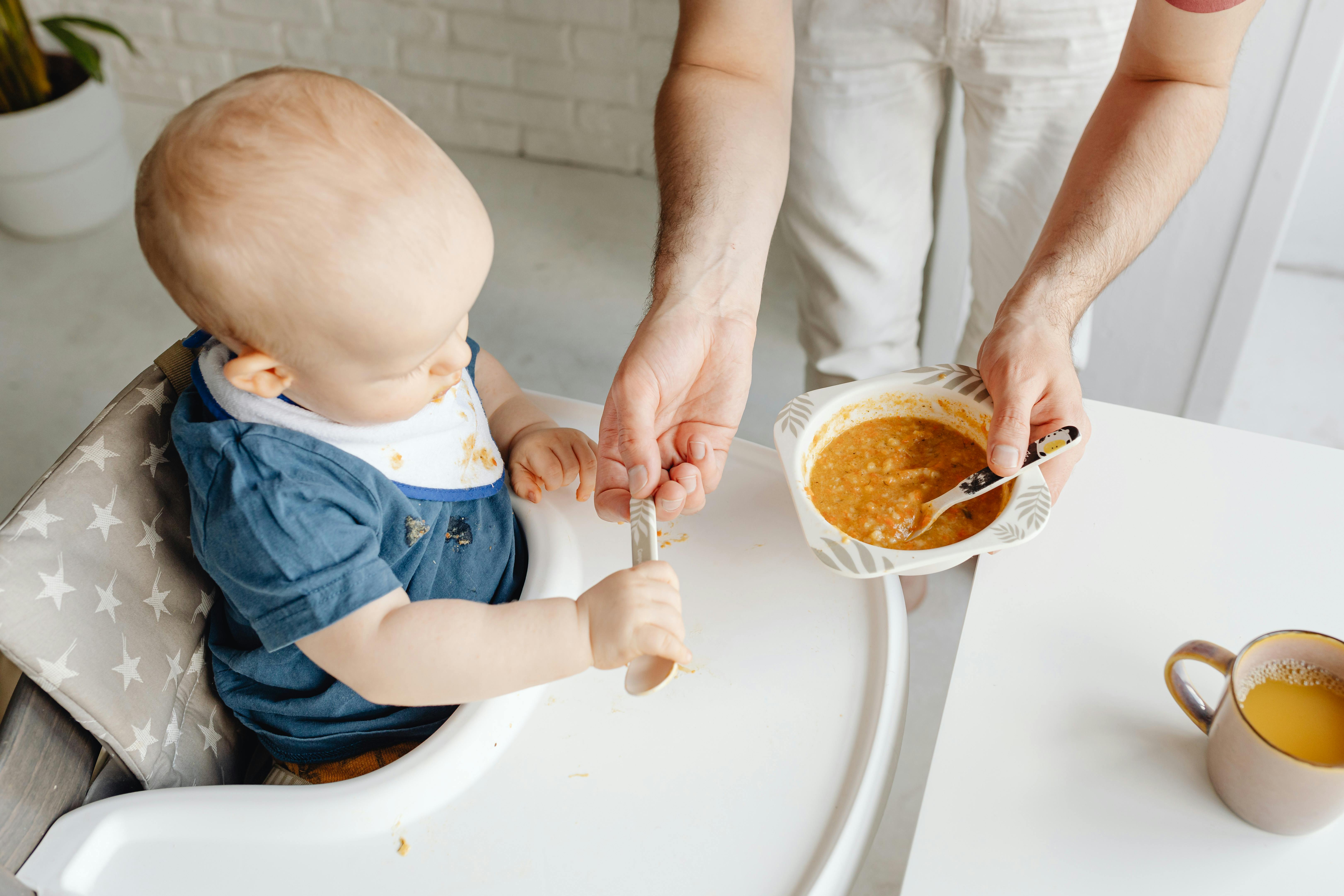
Expect mess, it is part of learning!
A lot of parents worry that their baby is “not eating properly” because most of the food ends up on the floor, in their hair or squashed into the highchair.
But sensory exploration is actually an important part of learning to eat.
Babies learn through touching, smelling, squishing and observing food long before they consistently consume large amounts of it. Research consistently shows that repeated exposure helps children become more familiar and comfortable with foods over time.
This means refusing broccoli once does not mean your baby hates broccoli forever.
Some children may need many exposures before accepting a food comfortably. That is normal development, not failure.
Gagging is common. Choking is different.
This is one of the biggest fears during weaning, and understandably so.
Gagging can look frightening, especially at first, but it is a protective reflex and is extremely common during weaning.
The 2024 Nutrients review found that while gagging episodes can occur relatively often during baby-led approaches, serious choking events are rare when food is prepared appropriately and babies are supervised properly. Nutrients review on complementary feeding approaches
That does not mean safety should be ignored, of course. Parents should still supervise meals closely, avoid high-risk choking foods and ideally learn basic infant first aid. But some gagging alone does not mean something has gone wrong.
Try not to let social media set the standard
One of the hardest parts of modern parenting is feeling like everything has become performative.
You open Instagram and suddenly everyone’s baby seems to be eating salmon quinoa fritters, spinach muffins and rainbow lunch trays.
Meanwhile, your baby has thrown toast on the floor three times and eaten half a strawberry.
That is normal. Really!
Research on parental experiences during complementary feeding has found that many parents experience anxiety, confusion and pressure during weaning, particularly due to conflicting information online.
Your baby does not need aesthetic meals to learn how to eat.
What matters far more is regular exposure, low-pressure mealtimes, responsive feeding and consistency over time.
So where should you actually start?
Start with simple foods. Focus on developmental readiness rather than perfection. Allow mess, exploration and repeated exposure. Keep mealtimes calm and low pressure.
And most importantly: remember that weaning is not a test you can pass or fail.
It is a learning process for both you and your baby.
If you are based in Dubai and feel overwhelmed about starting solids or baby-led weaning, I offer guided baby weaning courses designed to help parents feel more confident and informed throughout the process.
Sessions are available both in Dubai and online.
Georgia O'Neill
Child & Brain Development Nutritional Advisor
georgia@parentproofnutrition.com
WhatsApp: +971 58 594 1325
Instagram: @parentproofnutrition