The Truth About Baby Cereal That No One Is Talking About
Post Date :
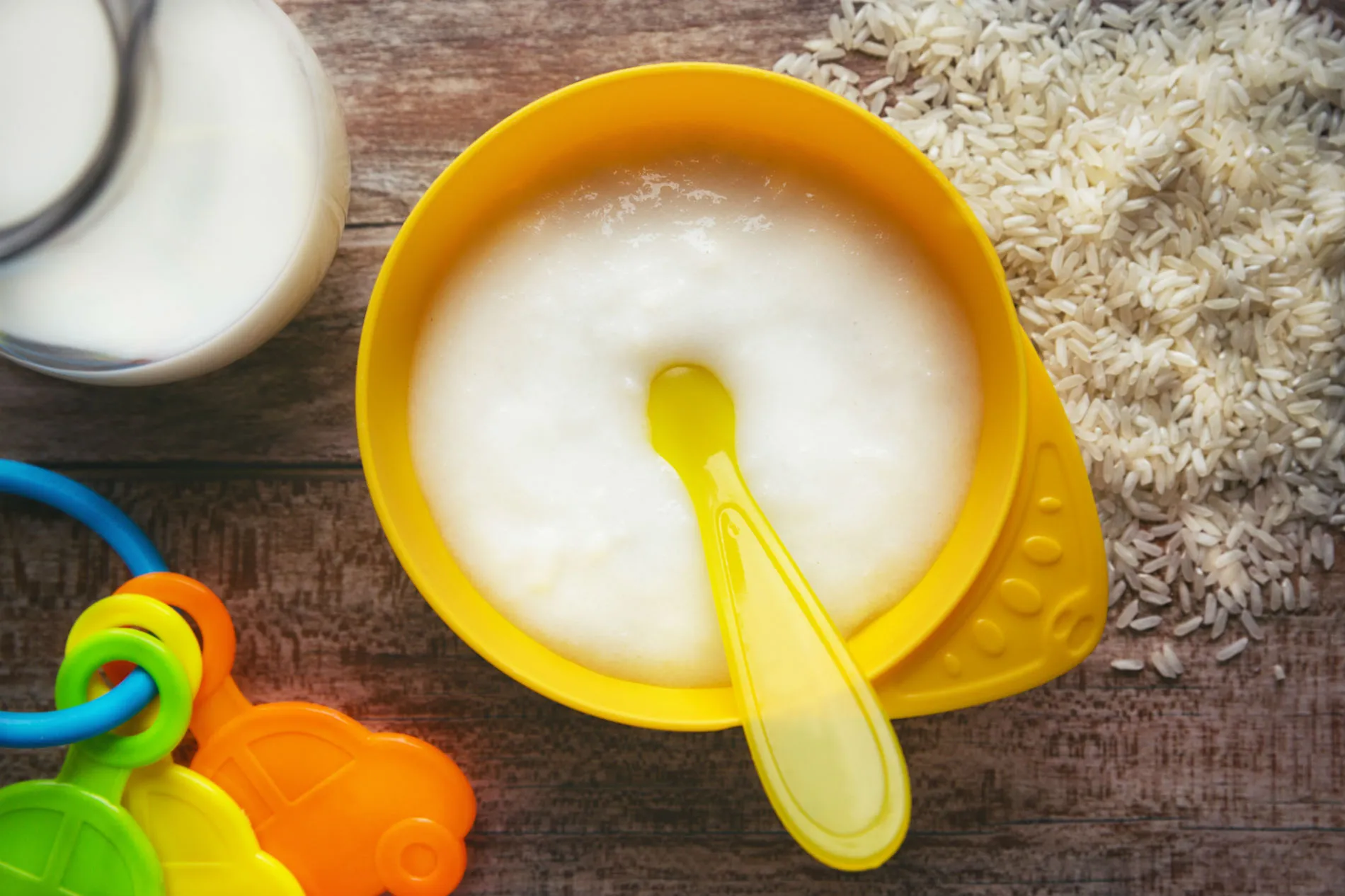
I have never I have never recommended baby cereal to my clients.
And I know that goes against what most people have been told, even potentially by paediatricians.
It’s one of the most common first foods. In the US, around 50% of infants are given baby cereal in their first year (Siega-Riz et al., 2010). It’s on every supermarket shelf. It’s often one of the first things suggested by doctors and health visitors.
But just because something is common doesn’t mean it’s the best option.
And still, people believe that if it is on the shelf in a shop and being marketed to children then surely it has to be completely healthy. Gone through all the checks, right?
Well, no.
We’ve seen this time and time again with children’s food. Products marketed as convenient, nutritious, even essential… only for us to realise years later that they weren’t quite what we thought.
Baby cereal sits in a similar space.
It’s not that it’s “toxic”. It’s not that one bowl is going to cause harm.
But when you actually look at how it’s made, how it behaves in the body, and what it replaces in a child’s diet, it starts to look a lot less ideal than people assume.
The Sugar Issue
Baby cereal breaks down into glucose quickly.
Most baby cereals are made from refined grains, often processed in a way that breaks starch down into simpler components, making it easier and faster to digest.
A large analysis of infant cereals found that many products contain significant amounts of sugar, either added or generated through processing, with some averaging over 20g per 100g (Garro-Mellado et al., 2022). For comparison, guidelines recommend zero added sugar in the diet of a 6 month old and the MAXIMUM for a 1 year old is 10g a day!
Research looking specifically at infant cereals has also shown that many contain a high proportion of rapidly digestible carbohydrates, meaning they are broken down and absorbed quickly (Monnard et al., 2022).
That leads to a faster rise in blood glucose compared to more intact, whole foods.
Now compare that to something like eggs, yoghurt, avocado, or even whole grains in their natural form. These foods are digested more slowly, provide more sustained energy, and contribute to satiety in a completely different way.
Baby cereal fills the stomach initially, but when something is digested very quickly, energy delivery is less stable, they become hungry quicker, and brain development can be affected.
Too Sweet for Young Mouths
Some baby cereals do have added sugar, and added sugar should be avoided completely for babies under 1.
But even when there’s “no added sugar” on the label, many baby cereals still taste sweet. That’s because of the way they’re processed.
During manufacturing, starches can be broken down into smaller sugars like glucose and maltose, which contribute to sweetness.
Why does this matter?
Because babies learn what food is supposed to taste like through exposure.
There is strong evidence that early feeding experiences shape food preferences, with repeated exposure influencing what children go on to accept and prefer (Birch & Anzman-Frasca, 2014).
The first foods you offer don’t just feed your baby.
They teach them what food is supposed to taste like.
So if a child is regularly exposed to sweeter tastes early on, it is not surprising if more bitter or complex flavours, such as vegetables, are rejected later.
At the end of the day, it’s a ultra-processed food (UPF)
When you look at how baby cereal is made, it’s hard to ignore the level of processing involved.
Grains are milled, heated, extruded, sometimes enzymatically treated, then dried and powdered.
The end result is something that dissolves easily, requires minimal chewing, and behaves very differently in the body compared to the original food.
There is growing concern around the role of ultra-processed foods in early diets, not only because of what’s added, but also because of what’s lost.
The natural structure of whole foods plays a role in how we digest, absorb, and respond to food.
A 2022 review of commercial baby foods found that many products, including cereals, are highly processed and often higher in sugars and lower in whole food integrity (Santos et al., 2022).
Ultra-processed foods have repeatedly been associated with poorer health outcomes across populations.
So my stance is, why feed them to our children if we don’t actually need to?
Rice cereal & arsenic (yes, arsenic)
Rice cereal, in particular, is where the strongest evidence sits.
Rice naturally accumulates inorganic arsenic from soil and water more than other grains.
This isn’t a new finding, but it’s especially relevant for infants, who consume more food relative to their body weight.
Studies have shown that infant rice cereal can contribute significantly to arsenic exposure in early life (Carignan et al., 2016).
So what does that actually mean?
Chronic exposure to inorganic arsenic has been associated with effects on cognitive development and broader long-term health risks (EFSA, 2009; Signes-Pastor et al., 2019).
Because of this, regulatory bodies have introduced limits on arsenic levels in infant rice cereal.
That should tell you something.
But babies need it for iron, don’t they?
This is where the conversation often lands. Iron.
In places like the UAE, iron deficiency is relatively common in infants and young children, with studies showing a notable proportion of children having inadequate iron intakes (Ismail et al., 2022; Al Mekaini et al., 2015).
So I completely understand why iron-fortified cereals are often recommended. They are an easy, measurable way to increase iron intake.
But “easy” doesn’t always mean “best”.
There are many ways to meet a child’s iron needs through whole foods.
Meat, liver, eggs, lentils, beans, paired with vitamin C-rich foods to enhance absorption.
These foods don’t just provide iron. They provide a wide range of nutrients, textures, and sensory experiences that are important for development.
Fortified cereal gives iron, but at what cost?
So, what happens after they move on from baby cereal?
This is the part that’s rarely talked about.
Baby cereal is often used heavily in the early stages of feeding.
It’s smooth, predictable and therefore easily accepted.
But then what?
At some point, children move on from baby cereal.
And if this was their primary source of iron, when they do, intake often drops.
If their diet hasn’t already been built around iron-rich whole foods, you’re now trying to introduce those foods later on, when preferences are more established and resistance is more likely.
This is where picky eating can start to creep in, because they were never given the opportunity to build familiarity with those foods early on.
Babies don’t need convenience foods. Parents do.
And I say that without judgement. Because I get it.
Baby cereal is quick and easy, there is no doubt about that.
I have two babies myself, I know that time is scarce and trying to cook a meal from scratch three times a day can feel near impossible while also trying to be present, play with them, do the chores, go to work, the list is endless.
Convenience has a place.
But when it becomes the default, especially at the very start of a child’s feeding journey, it’s worth pausing and asking why.
Batch cooking is something I stand by. If you can get childcare for a couple of hours or even squeeze it in during nap time, it is worth doing.
Batch cooking something like spinach and apple pancakes and freezing them might take you an hour, but you can use these for weeks. Defrosting them in the morning takes no more time than preparing baby cereal.
But I understand that many parents simply don’t know where to start.
The baby cereal in the supermarket is done for you.
I am suggesting you make high-iron alternatives at home.
And you are probably thinking, what even are the high-iron foods, and what could I actually make with them?
Well, that is where I come in! Just contact me and I can guide you in the right direction.
But I’ve fed baby cereal for months already, should I panic?
No, of course not.
Baby cereal isn’t harmful in that way.
I know this blog focuses on the negatives, but this isn’t about fear. It is more for awareness, because so many parents I speak to are shocked to hear this about baby cereal when I speak to them.
It’s also about understanding that there are better, more nourishing options available.
One’s that support not just nutrient intake, but long-term eating habits.
My final thoughts on baby cereal
Just because something is widely recommended doesn’t mean it’s optimal.
Just because it’s on every supermarket shelf doesn’t mean it’s the best choice.
And just because it’s easy doesn’t mean it’s what your child needs.
When you understand how babies learn to eat, and how early nutrition shapes long-term habits, it becomes much clearer.
Real food makes more sense.
If you’re not sure where to start…
If you’re reading this and thinking, “okay… but what do I actually feed instead?”
You’re not alone.
This is exactly where most parents get stuck.
If you want help with baby weaning, picky eating, or making sure your child is getting enough iron without relying on baby cereal, you can get in touch with me directly.
My email is: georgia@parentproofnutrition.com
I’ll help you work through it in a way that actually fits your life.